
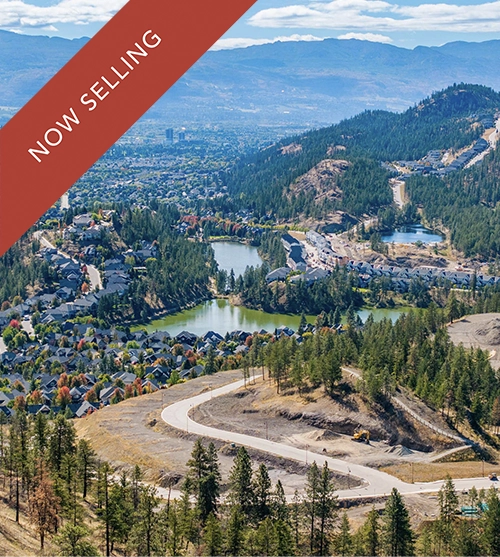
 Hidden Hills Lots
 Pondside Townhomes
 Antler Heights Duplexes
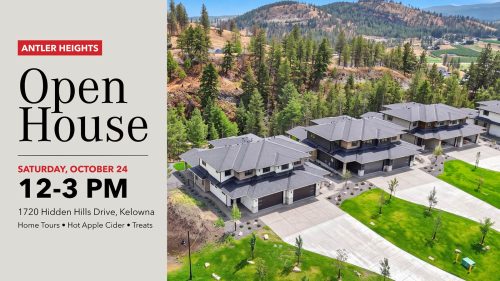 Antler Heights Open House | Oct. 24
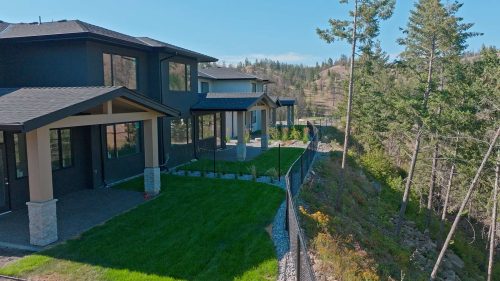 Antler Heights Update: Landscaping Has Started
One Year After the Fire
It’s hard to believe that a year has passed since the McDougall Creek fire struck the Wilden land in the late evening of August 17, 2023. Yet, in some ways, it already feels like history. How can both be true at the same time? In these past twelve months the recovery of the affected ecosystem happened faster than anyone had imagined.
A recap by Wilden’s director and CEO, Karin Eger-Blenk
Three days before the fire hit, I had an email exchange with Rick Passuto, the fire mitigation expert we had worked with for the past seven years. He let me know that he will be away for a few weeks. Did we need anything done before he left?
We had been following a prioritized list of areas to mitigate, and only a few small pockets remained to be completed. But given the extremely hot and dry conditions, we couldn’t do much at that moment. We agreed to wait for the fall with any further steps.
I wrote, “This summer is definitely a nail biter. I’m glad we got so much work done! It certainly wouldn’t take much right now to start a fire, and there’s no rain in the forecast either. It’ll be a relief when the temperature finally drops.”
Instead of dropping, the temperature soared above 40 degrees Celsius in the following days. Before it eventually cooled down, strong winds set in, intensifying the McDougall Creek fire on the west side and carrying embers across Okanagan Lake. Some embers landed directly beneath Wilden Ridge and rapidly raced up the hill. By 11 p.m. on August 17th all Wilden residents were under an evacuation order.
The following day, the province declared a state of emergency, and a ministerial order was issued advising against nonessential travel to the BC interior. Kelowna made international news, and friends from Europe—some of whom I hadn’t heard from in years—flooded me and my family with concerned messages: “Are you all okay?”
But the fact that we, the Kelowna evacuees, had made the front pages was the last thing on our minds. Up in our family cabin in Big White, we had little information about what was happening on our land. Most surveillance cameras had melted, some had sent us final pictures full of smoke, and – sadly – of our little “fire watch cabin” on Wilden Ridge going up in flames.
Taming the fire
Whenever we got some images, we saw that our fire break along the ridge had worked and that the flames stayed on the ground. They were driven in all directions by ever changing winds. The moment my son Vince spotted a fire just a few meters from the water station up on Wilden Ridge, we called the fire department. On Vince’s home security camera in Echo Ridge, we watched the fire truck arrive within minutes of our call. From then on, we observed as the crews worked tirelessly to keep the fire in check behind the houses in Echo Ridge and Upper Canyon.

After eight days, all Wilden residents were allowed to return to their homes. Some, including my husband and me, felt a chill when we saw how close the firelines had come to our house. Yet, most trees were still standing. We soon learned that the situation could have ended much worse, had we been less well prepared. The cabin in the middle of the woods remained the only structure lost.
However, that eerie feeling returned when we first drove through the burnt areas with Rick Passuto, assessing the damage. The ground was blackened, some of our favorite ancient trees were gone, and the once rich and diverse ground vegetation had been reduced to ashes. “Wait two years and you’ll have paradise here”, said Rick. Standing in this moonscape, his words were hard to believe.

Fast forward one year.
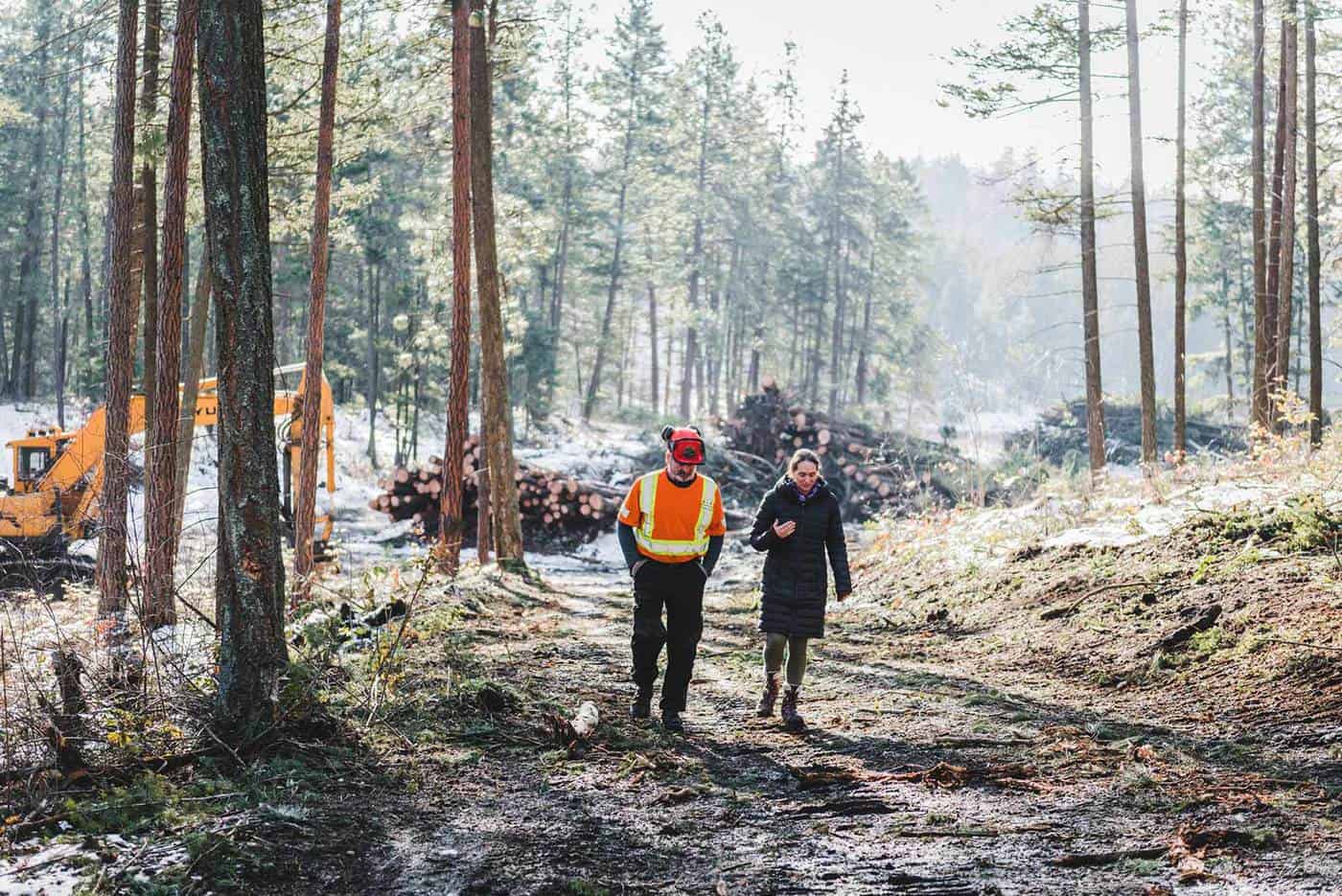
Still feeling like I’m in the midst of one of the steepest learning curves of my life, my husband Michael and I recently toured the land with UBC Professor Mathieu Bourbonnais to gain his insights on fire damage and ecosystem recovery.
In conversations with Mathieu, I realized that, like so many others, I had been influenced by media narratives that often portray wildfires in a negative and sensationalized way, rarely acknowledging the positive effects fires can have—especially when they behave like the Wilden fire, staying on the ground and turning dead wood and plant matter into fertilizer for regrowth.
Coexisting with Wildfires
Originally managed by indigenous fire stewardship, wildfires were once more frequent but less destructive. Research on tree rings shows that low-intensity surface fires maintained healthy forests and biodiversity.
Modern fire suppression and the timber industry’s densification practices have disrupted natural fire regimes, leading to suffering forests with too many trees that do not get enough energy. These conditions have increased the risk of devastating, fast spreading fires that kill trees, destroy ecosystems and are very dangerous if they happen close to communities.
Mathieu confirmed what had overwhelmed us in the spring of 2024: the ground vegetation had grown back more diverse and lush than we had ever seen. Roughly 30% of the trees were lost, but the remaining ones were now thriving, benefiting from an abundance of nutrients in the soil and more light due to the increased space around them.
“Whenever a fire is threatening homes, of course people are angry and scared— but what if we could shift attitudes and get to a point where people understand the very important role fire plays in our ecosystems and communities accepted the use of prescribed burns and other activities to proactively manage wildfire risk?” asks Mathieu Bourbonnais.


Next steps
Preserving large natural areas where native vegetation and wildlife can thrive is a cornerstone of the Wilden master plan. Forests will always remain close to our neighborhoods. But the scenario that is now behind us showed that we just need to keep doing what we do. We will continue our current practices of clearing out forest fuel, spacing trees, and conducting controlled burns. This will make fires easy to control and keep away from homes.
But mitigation includes more than that. Aside from being a FireSmart certified development we have also updated our building and landscaping guidelines to incorporate all FireSmart regulations for homes built in Wilden. Furthermore, we conserve native seeds before we move into an area for construction and replant them afterward. Native plants are best adapted to the changing climate and the increasing drought conditions.
While we continue to improve our ability to safely coexist with wildfires, we must remain mindful of the root cause of rising fire probability. By driving sustainable building practices forward we do our part in tackling climate change and hitting climate goals. With every home we build, we raise our standards for energy efficiency, integration of renewable energy sources, and reduction of carbon emissions.
There is still much work to do. I hope you’ll continue following the story of Wilden, share your feedback, and stay in touch.
